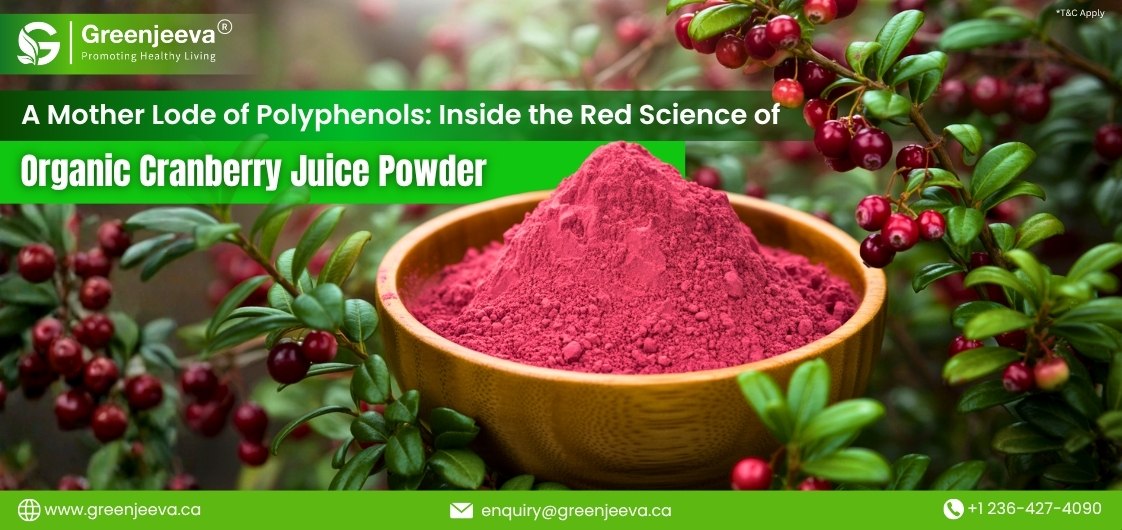

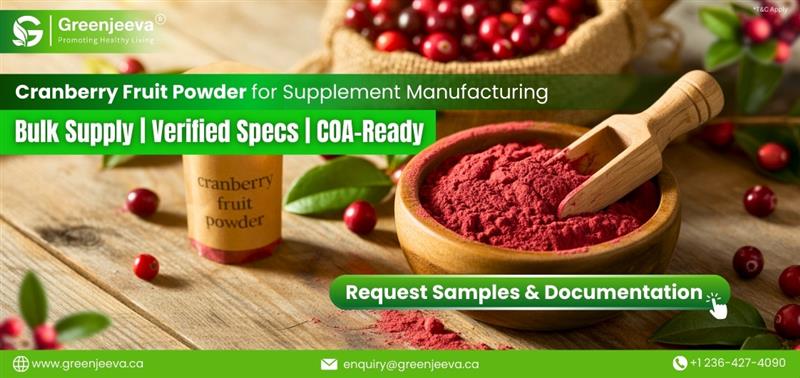
Cranberry fruit powder is used widely in nutritional supplement formulations because of its clean label positioning, color stability, and compatibility with capsules, tablets, and powdered blends. As demand increases across North America, procurement managers and formulation teams are focusing more on material verification before onboarding a new bulk cranberry fruit powder supply partner. A Certificate of Analysis (COA) is central to this process because it confirms product identity, compliance parameters, and manufacturing readiness.
This guide outlines what sourcing teams should check on a COA when evaluating cranberry fruit powder, especially when working with wholesale cranberry fruit powder suppliers in Canada.
What does the COA confirm about the identity and grade of cranberry fruit powder
Buyers often ask which COA fields verify identity, authenticity, and material grade for cranberry fruit powder used in supplement formulations.
A COA should clearly state the identity of the ingredient, including the botanical name, processing method, and grade. Supplement manufacturers typically compare this information against their internal specification sheet before a qualification decision.
Key identity fields include:
– Product name and botanical name— should reflect cranberry fruit powder from Vaccinium species.
– Type of powder— whole-fruit powder, juice powder, or extract-based powder. Each behaves differently in supplement systems.
– Processing method– spray-dried or freeze-dried. This affects solubility, color intensity, and bulk density.
– Carrier declaration– crucial for clean label products. Some wholesale cranberry fruit powder suppliers use maltodextrin or inulin for spray-dried grades. If a no-carrier claim is expected, ensure it is clearly listed.
– Appearance description– color, aroma, mesh size, and texture. These parameters directly impact blend uniformity, capsule fill weight, and the visual profile of powdered formulas.
Identity confirmation helps teams verify whether the material aligns with internal formulation needs and labeling expectations.
What composition and quality parameters should R&D teams check on a COA
Formulators often want to know which analytical values, composition metrics, and physical properties need to be reviewed before using cranberry fruit powder in supplements.
A strong COA provides quantitative information that directly affects processing, stability, and product performance.
Important composition fields include:
– Moisture content— lower levels support stability and prevent clumping. For most cranberry fruit powder grades, this ranges between low and moderate levels depending on the drying method.
– Water activity (when applicable)– helps assess storage suitability and microbiological stability.
– Bulk density— essential for capsule size decisions, scoop weights, and blending calculations.
– Mesh size– influences flowability and dispersion in multi-component blends.
– Soluble solids— especially relevant for juice powders and beverage-focused supplement formats.
– Color metrics – useful for supplements requiring consistent visual appearance.
– Marker compounds– some teams monitor polyphenol ranges or general fruit solids to ensure repeatable material performance. No specific claim is needed, but consistency is important for product uniformity.
For teams purchasing bulk cranberry fruit powder, these values support predictable processing and reduce the risk of rework during scaling.
Which microbiological parameters should sourcing teams verify on the COA
Manufacturers frequently ask which microbiological specifications are essential for supplement-grade cranberry fruit powder.
Supplement manufacturers typically expect cranberry fruit powder to meet standard microbiological specifications suited for low-moisture fruit powders.
Standard COA microbiology fields include:
– Total plate count
– Yeast and mold
– Coliforms
– E. coli
– Salmonella— should be absent in tested quantity
Acceptable limits vary by internal standards and market requirements. Reviewing these fields helps ensure compatibility with GMP manufacturing environments and reduces microbial-related deviation risks.

What contaminants and safety parameters should be checked before purchasing bulk cranberry fruit powder
Procurement teams want clarity on which safety parameters matter most when comparing wholesale cranberry powder pricing and supplier options.
Contaminant testing is a core part of supplier qualification and plays a major role in pricing differences between suppliers.
Key safety parameters include:
– Heavy metals— lead, cadmium, arsenic, and mercury—must fall within acceptable regulatory levels.
– Pesticide residue testing— especially important for buyers importing into Canada.
– Allergen statements— confirm whether the material is produced on lines that also process priority allergens.
– Residue solvents– relevant when dealing with extract-based cranberry powders.
– Foreign matter testing– ensures the material is suited for fine powder applications in supplement formulations.
Suppliers offering higher testing frequencies or stronger documentation may list higher wholesale cranberry powder pricing, but this often aligns with stricter quality assurance measures.
How does the COA help evaluate processing suitability for supplement manufacturing
Buyers often ask how COA data predicts processing behavior in capsules, tablets, and powder blends.
Processing suitability depends heavily on physical properties reported on the COA.
Important parameters include:
– Particle size distribution– impacts flowability, tableting behavior, and uniformity.
– Flow characteristics– while not always listed, some suppliers include angle-of-repose data.
– Bulk and tapped density– crucial for capsule fill weight calculations and scoop consistency.
– Loss on drying— helps predict stability during storage and blending.
– pH (when applicable)— relevant for systems where acidity influences final product interaction.
Teams working with bulk cranberry fruit powder supply often run pilot blends using the COA as a reference point. This reduces formulation variability and supports predictable scale-up.
What documentation should accompany the COA during supplier approval
Sourcing teams usually ask which supporting documents are required when onboarding cranberry fruit powder suppliers in Canada.
A qualified supplier should provide the following along with the COA:
– Specification sheet
– SDS
– Allergen and GMO statements
– Country of origin details
– Organic certificate (if applicable to the product grade)
– Manufacturing flow chart (when required for audit purposes)
– Packaging information and recommended storage conditions
For companies evaluating wholesale cranberry fruit powder suppliers or cranberry fruit powder suppliers in Canada, this documentation is useful for compliance review, internal audits, and regulatory submissions.

Conclusion
A COA is the central document procurement managers and formulation teams rely on when assessing cranberry powder for supplement formulations. Reviewing identity, composition, microbiology, contaminants, and physical characteristics helps ensure the material aligns with project specifications and manufacturing needs. With supply chains continuing to diversify, thorough COA evaluation supports consistent quality, predictable processing, and dependable sourcing outcomes—especially when comparing wholesale cranberry fruit powder supplier options.
If your team is evaluating cranberry powder for supplement manufacturing, Green Jeeva can support your sourcing needs with verified specifications, samples, documentation, and industry-ready ingredient options. Let us know your requirement, and our team will share COAs, samples, and compliance details for review. Get a quote now!
**The Food and Drug Administration has not evaluated these statements. This product is not intended to diagnose, treat, cure, or prevent any disease.**