Echinacea Extract: A Versatile Ingredient Across Multiple Industries
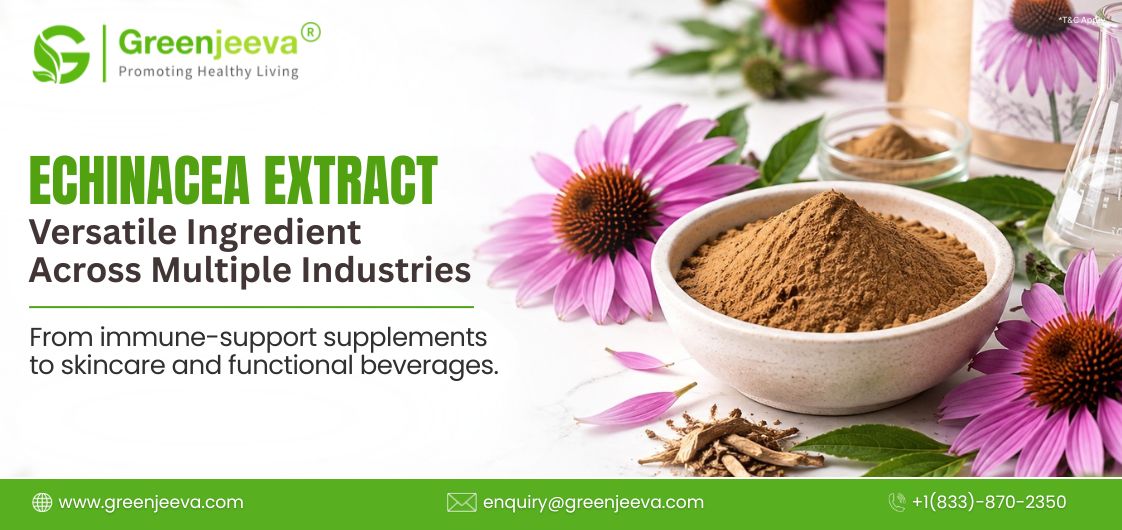
Echinacea extract powder derived from the purple coneflower, Echinacea purpurea has grown from a cold-and-flu-season staple into one of the more widely formulated botanical ingredients on the market. It shows up in immune-support supplements, anti-aging skincare, and increasingly in functional food and beverage products, as brands across multiple industries lean into natural, plant-based formulations.
The market reflects that momentum: current tracking puts the global echinacea extract market at roughly $2.48 billion in 2026, growing to an estimated $3.79 billion by 2030 at a CAGR of about 11.1%, according to The Business Research Company a faster pace than earlier forecasts anticipated, driven by rising demand for standardized herbal extracts and expanding nutraceutical product lines.
Here's how echinacea extract is being used across industries, what to know about sourcing it including Canada's specific regulatory path and where the category is headed next.

Understanding Echinacea Extract
Echinacea extract is derived from the purple coneflower plant and available in several forms, most commonly echinacea powder and liquid extract, giving formulators flexibility across product types. It contains a complex mix of active compounds including alkamides, polysaccharides, and phenolic compounds like cichoric and caffeic acid that contribute to its antioxidant and immunomodulatory properties. Organic echinacea powder is typically produced from the dried root, leaf, or flower of Echinacea purpurea, ground into a fine powder for use in capsules, blends, and formulations.
Echinacea Extract in the Nutraceutical Industry
The nutraceutical sector remains the largest market for echinacea extract, and for good reason:
Health Support- Echinacea is best known for its traditional use in supporting immune function, making it a staple in cold and flu season supplement formulations.
Antioxidant Properties- The phenolic compounds in echinacea offer antioxidant benefits, aligning with consumer interest in wellness and anti-aging products.
Versatile Formulations- Whether as echinacea powder in capsules or extract liquid in tinctures, it adapts to a wide range of supplement formats, which is part of why it remains a go-to ingredient for formulators building immune-health lines.
Echinacea Extract for Skin: A Rising Star in Cosmetics
The cosmetics industry has increasingly picked up on echinacea for topical applications:
Anti-Aging Formulations - Its antioxidant properties make echinacea a natural fit for products aimed at combating free radical damage.
Soothing Properties - Echinacea's traditional use for calming irritation makes it useful in products for sensitive or reactive skin.
Natural Appeal - For brands building plant-based skincare lines, echinacea offers a recognizable, naturally derived ingredient story that resonates with clean-beauty positioning.
Echinacea in the Food and Beverage Industry
This is a smaller but growing application:
Health-Boosting Drinks - Some beverage manufacturers are incorporating echinacea extract liquid into functional, health-focused drink formulations.
Functional Teas - Echinacea-infused teas continue to gain traction in the wellness and natural products space, particularly during cold-and-flu season marketing pushes.
Challenges and Considerations for Manufacturers
The growth story doesn't mean sourcing echinacea is friction-free. A few recurring issues shape how manufacturers and product developers approach it:
- Standardization - Potency and quality can vary meaningfully depending on plant source, growing conditions, and extraction method, making batch-to-batch consistency a real sourcing concern.
- Regulatory compliance - Claims and usage regulations differ by market. In Canada specifically, echinacea is regulated as a Natural Health Product (NHP), not simply a food ingredient more on that below.
- Stability - Echinacea is sensitive to heat and light, so formulation and packaging choices matter for maintaining efficacy over shelf life.
- Sourcing security - As demand grows, securing a stable, high-quality supply becomes a bigger priority for buyers building long-term formulations around the ingredient.

The Future of Echinacea Extract in Industry
A few directions are shaping where this ingredient goes next:
- Personalized nutrition - as tailored supplement regimens grow, echinacea is a candidate for more customized immune-health formulations
- Advanced skincare - further research into echinacea's dermatological properties could lead to more targeted, condition-specific cosmetic applications
- Sustainable and organic sourcing - as sustainability becomes a bigger purchasing factor, demand for organic and sustainably sourced echinacea extract is expected to grow alongside the broader market
Sourcing Echinacea Extract: Certification and Supplier Essentials
For businesses formulating with echinacea, sourcing decisions largely come down to two things: certification and supplier consistency.
In Canada: Echinacea-containing products are regulated under Health Canada's Natural Health Products Regulations, which require a Natural Product Number (NPN) before sale. Because echinacea already has an established Health Canada monograph, manufacturers can often follow the simpler Class I compendial licensing route provided the product matches the monograph's specifications for dosage, indication, and labelling rather than submitting original clinical evidence. This is a meaningful difference from formulating with a novel or non-monographed ingredient.
In the US: USDA Organic (NOP) certification applies for organic claims, and finished products fall under FDA dietary supplement requirements.

What to look for in an organic echinacea extract powder supplier or manufacturer:
- Valid organic certification, matched to your target market (USDA for the US, and awareness of Canada's NHP framework for Canadian formulations)
- A per-lot Certificate of Analysis (COA) covering identity, potency, and microbial/heavy metal testing
- Consistency across batches potency and extraction ratio shouldn't drift between production runs
- Traceability back to source, especially given how much quality varies with growing conditions
- Format and customization flexibility whether you need a specific echinacea powder concentration, extraction ratio, or a private label organic echinacea powder program
For Canadian manufacturers specifically, a bulk organic echinacea powder supplier in Canada who can speak directly to NHP/NPN requirements not just organic certification removes a compliance step that otherwise lands on the buyer's desk.
Ready to Source?
If you're formulating with echinacea for the Canadian market, start with a supplier who can speak to both organic certification and NHP compliance. Explore Green Jeeva Canada's organic echinacea powder specs and COA.