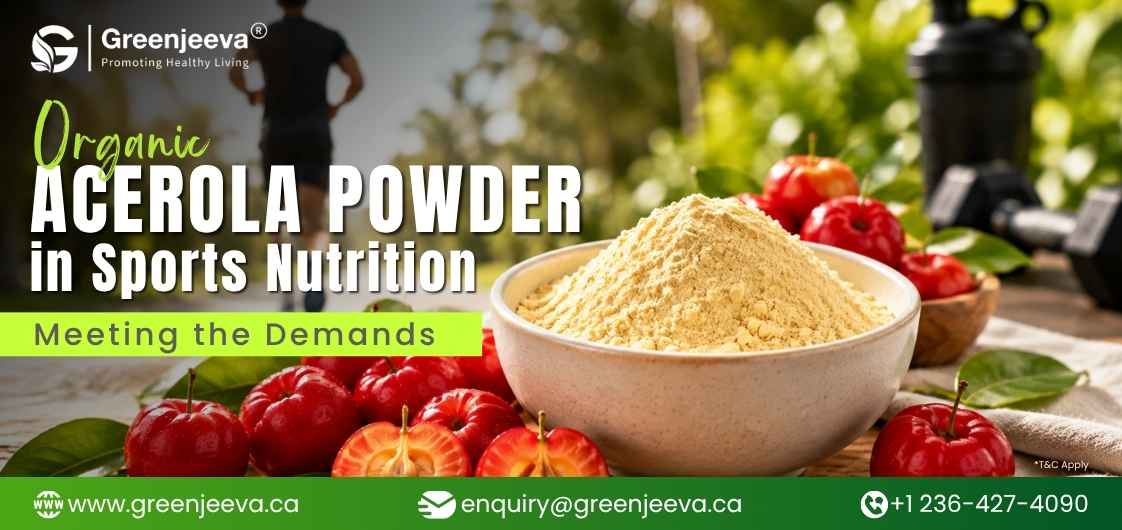
Organic Acerola Powder in Sports Nutrition: Meeting the Demands
Two ingredients can carry almost the same name on a spec sheet and behave nothing alike in a formulation. Acerola is a good example. "Organic acerola powder" and "acerola extract powder" both show up in supplier catalogs, both come from the same small red fruit, and both get used more or less interchangeably in a lot of marketing copy. They shouldn't be. One is the whole fruit, dried and ground, with a vitamin C content that swings depending on the batch. The other is standardized to a guaranteed percentage. A formulator who mixes them up ends up with a label claim the ingredient can't actually back up, or a spec sheet that doesn't match what showed up in the shipment.
That confusion is worth clearing up before getting into why acerola has become genuinely popular in sports nutrition, because the "why" only matters once the "which one" is settled.
The Fruit Behind the Name
Acerola (Malpighia emarginata) is a small, tart, cherry-like fruit native to Central and South America and the Caribbean. Despite the common name, it isn't a true cherry and isn't botanically related to one. What it's known for is vitamin C, and the numbers are genuinely striking, though they vary more than most marketing copy lets on.
Peer-reviewed analyses report vitamin C levels anywhere from roughly 1,000 to 4,500 mg per 100 g of fresh fruit, depending on ripeness, growing conditions, and how the fruit was processed. Most sources put that somewhere between 50 and 100 times the vitamin C content of an orange by weight. That's a wide range, and it's exactly why a raw, unstandardized fruit powder and a lab-standardized extract are different products, not two names for the same thing.
Powder or Extract: Which One Are You Actually Buying?
Organic acerola powder is the whole dried fruit, milled fine. Its vitamin C content reflects whatever that particular harvest and batch happened to contain, which is useful for a whole-food, minimally processed positioning but genuinely unpredictable if a formulation needs a specific, guaranteed dose.
Acerola extract powder solves that by concentrating and standardizing the fruit to a guaranteed vitamin C percentage, commonly somewhere in the 17% to 32% range, verified by HPLC or titration. That's the version most sports nutrition and supplement formulations actually need, because a label claim requires a number that holds up on every lot.
Green Jeeva's confirmed Canadian catalog sits on the extract side of this: organic acerola cherry extract powder, standardized and HPLC-verified, with COR, Halal, and Kosher certification. If a project genuinely calls for the whole, unstandardized fruit powder instead, that's a separate conversation to have with the supplier directly rather than an assumption to make from the product name alone.

So Why Is Everyone Suddenly Interested in It?
Sports nutrition has been drifting away from synthetic vitamin blends for a while now, and acerola has ended up as one of the beneficiaries. Innova Market Insights named acerola specifically among the herbal and fruit extracts worth watching in its 2025 natural ingredient trend research, in the same list as milk thistle, maca, and ashwagandha. That's a meaningfully different signal than a vague "consumers want natural ingredients" statistic. It means acerola is showing up in actual product development pipelines, not just survey answers.
The market it's landing in is expanding fast, too. Grand View Research's current estimate puts the global sports nutrition market at USD 71.6 billion in 2025, projected to reach USD 138.5 billion by 2033 at an 8.7% CAGR. Vitamin C from a single, recognizable fruit fits neatly into that growth, since it lets a brand make a clean label claim without an ingredient list full of things a consumer has to look up.
None of that makes acerola nutritionally unique among vitamin C sources. What makes it usable is the same thing that makes any botanical usable: a standardized, well-documented supply that a formulator can actually build a label claim around, rather than a fruit that sounds impressive in a blog post.
The Formulation Reality
Acerola's tartness is real and needs planning for, not masking. It reads as natural rather than artificial, which is an advantage in most sports nutrition formats, but it still needs balancing in a pre-workout or recovery beverage the same way any tart ingredient does. Vitamin C also degrades with heat, light, and moisture, acerola included, so packaging and processing decisions matter for shelf life regardless of which form is used. And in practice, acerola rarely shows up alone. It's usually paired with other fruit-based antioxidants or electrolytes in a finished formulation, which is worth planning for from the start rather than treating as an afterthought.
The Canadian Wrinkle Most Acerola Content Skips
Here's the part that matters specifically for a Canadian audience and that a lot of acerola marketing content, written for the US market, doesn't mention at all.
Vitamin C is classified as a Natural Health Product ingredient under Schedule 1 of Canada's Natural Health Products Regulations. That means a finished product making a specific claim tied to acerola's vitamin C content, antioxidant support, immune function, collagen formation, generally needs a Natural Product Number (NPN) issued by Health Canada before that claim can legally go on the label. This applies whether the vitamin C is synthetic or comes from a fruit like acerola; the source doesn't exempt the claim from the rule.
It doesn't apply to everything, though. A functional beverage using acerola mainly for flavor or color, without a specific health claim attached to it, sits in a different regulatory lane than a supplement explicitly claiming immune or antioxidant support. That distinction, food with acerola in it versus a natural health product making a claim about acerola, is what determines which set of Canadian rules a product actually falls under, and it's worth running past a regulatory advisor before the packaging is finalized either way.

Before Committing to a Supplier
The spec sheet questions that actually matter here are narrower than they look. Confirm whether the product is whole fruit powder or standardized extract, and at what guaranteed vitamin C percentage, backed by a real Certificate of Analysis rather than a range quoted from memory. Ask whether that percentage was verified by HPLC or titration, since both are used across the industry and aren't identical in precision. Confirm organic, Halal, and Kosher certification for the specific SKU rather than the supplier's catalog in general, and get moisture content and heavy metal testing figures for the lot you'd actually be buying.
Green Jeeva Canada's certifications page and certified ingredients search are the fastest way to check that directly rather than taking a claim at face value.
**The Food and Drug Administration has not evaluated these statements. This product is not intended to diagnose, treat, cure, or prevent any disease.**