
Beyond Organic Certification: How Manufacturers Evaluate Organic Okra Powder Supply Partners
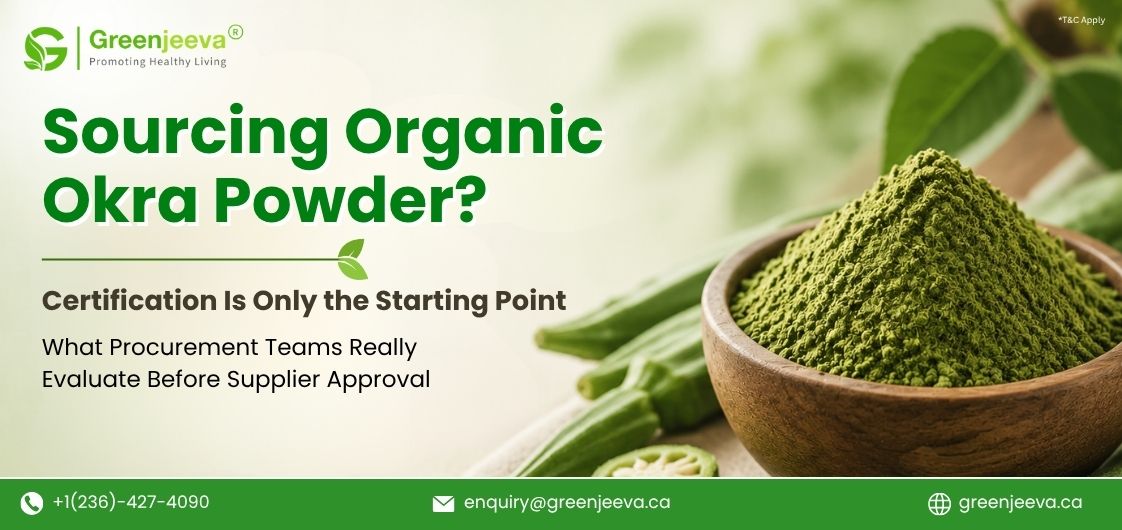
As demand for organic ingredients continues to expand across food, nutraceutical, and personal care markets, sourcing teams are facing increasing pressure to qualify suppliers more thoroughly. While organic certification remains an important requirement, experienced procurement professionals understand that certification alone does not determine whether a supplier can consistently support commercial manufacturing.
When sourcing organic okra fruit powder, manufacturers must evaluate factors that extend beyond compliance documentation. Supply continuity, quality consistency, traceability, testing protocols, and operational reliability all play critical roles in supplier qualification and long-term procurement success.
For organizations purchasing bulk organic okra powder, a structured supplier evaluation process helps reduce sourcing risks while supporting product quality and manufacturing efficiency.
Why Organic Certification Is Only One Part of Supplier Evaluation
Organic certification provides assurance that production and handling practices comply with established organic standards. However, certification does not automatically confirm a supplier's ability to meet a manufacturer's broader operational requirements.
A supplier may hold valid organic certifications while still facing challenges related to inventory management, documentation responsiveness, batch consistency, or lead time reliability.
For procurement teams, certification serves as an entry requirement rather than a final qualification criterion.
Certification Confirms Compliance, Not Operational Performance
Organic certification verifies adherence to specific agricultural and processing standards. It does not evaluate:
- Supply chain resilience
- Forecasting capabilities
- Inventory availability
- Technical support responsiveness
- Documentation turnaround times
- Consistency between production lots
These factors often become apparent only during supplier qualification and ongoing procurement activities.
The Difference Between a Certified Supplier and a Qualified Supplier
A certified supplier has demonstrated compliance with organic standards. A qualified supplier has demonstrated the ability to support commercial manufacturing requirements consistently over time.
Manufacturers typically seek suppliers that can provide:
- Reliable documentation
- Consistent product quality
- Traceable supply chains
- Stable inventory management
- Responsive communication
- Long-term supply support
These considerations become increasingly important when sourcing bulk okra powder for ongoing production programs.
How Manufacturers Qualify Organic Okra Powder Suppliers Internally
Most manufacturers follow a structured supplier approval process before adding new suppliers to their approved vendor lists.
Although qualification procedures vary by organization, the overall framework remains similar across industries.
Initial Supplier Screening
The first stage often involves the following review:
- Company background
- Product portfolio
- Geographic sourcing capabilities
- Quality certifications
- Industry experience
At this stage, suppliers are typically assessed for basic fit before more detailed evaluations begin.
Documentation Review
Procurement and quality teams commonly review:
- Product specifications
- Certificates of analysis (COAs)
- Organic certifications
- Allergen statements
- Heavy metal testing data
- Microbiological testing information
Documentation quality often provides an early indication of a supplier's operational maturity.
Sample Evaluation
Before large-scale purchasing decisions are made, manufacturers frequently request samples to assess the following:
- Appearance
- Color consistency
- Particle size
- Flowability
- Packaging quality
The objective is to verify alignment between supplied material and documented specifications.
Commercial Assessment
Commercial reviews generally focus on:
- Pricing stability
- Lead times
- Minimum order quantities
- Inventory support
- Forecasting capabilities
This stage helps determine whether a supplier can support long-term procurement requirements rather than individual transactions.
What Procurement Teams Evaluate Beyond Organic Certification
Once basic compliance requirements are satisfied, sourcing teams typically evaluate a broader set of operational criteria.
Supply Chain Traceability
Traceability has become a major consideration in ingredient procurement.
For organic okra powder, buyers increasingly seek visibility into:
- Raw material origin
- Processing locations
- Batch identification systems
- Documentation workflows
Strong traceability supports audit readiness and improves supply chain transparency.
Quality Management Systems
Quality management practices often distinguish high-performing suppliers from average suppliers.
Key considerations include the following:
- Defined quality procedures
- Batch release protocols
- Testing programs
- Corrective action processes
- Recordkeeping systems
Well-established quality systems help maintain consistency across production cycles.
Documentation Readiness
Procurement teams frequently evaluate how efficiently suppliers can provide documentation.
Delayed or incomplete documentation can create bottlenecks during:
- Product development
- Quality reviews
- Regulatory assessments
- Supplier audits
Documentation readiness is often viewed as a reflection of the overall supplier organization.
Inventory and Supply Continuity
Supply interruptions can have significant downstream effects on production schedules.
As a result, manufacturers often assess the following:
- Inventory management practices
- Forecasting capabilities
- Supply planning processes
- Warehousing support
- Lead time consistency
These factors become particularly important when sourcing organic okra powder in wholesale quantities.

Why Product Specifications Do Not Tell the Full Sourcing Story
Specifications are important procurement tools, but they represent only a snapshot of product characteristics.
Two suppliers may provide nearly identical specification sheets while delivering significantly different sourcing experiences.
Similar Specifications Can Produce Different Outcomes
Specification documents typically outline measurable parameters such as:
- Moisture
- Particle size
- Appearance
- Microbiological limits
However, they do not necessarily reveal the following:
- Process consistency
- Supplier responsiveness
- Inventory reliability
- Documentation support
These operational factors often have a greater impact on procurement success than specification values alone.
Consistency Matters More Than a Single Batch
One compliant batch does not guarantee future consistency.
Manufacturers frequently evaluate:
- Historical batch performance
- Quality trends
- Production controls
- Variability management practices
Consistency across multiple production lots is often a stronger indicator of supplier reliability than individual test results.
Evaluating Supply Chain Stability and Supply Continuity
Ingredient shortages, transportation disruptions, and shifting agricultural conditions have increased focus on supply chain resilience.
When evaluating an organic okra powder supplier, procurement teams increasingly assess supply continuity alongside quality requirements.
Supply Stability Considerations
Important factors include:
- Multiple sourcing relationships
- Inventory planning processes
- Warehousing infrastructure
- Contingency planning
- Forecast support
These capabilities can help reduce procurement risks during periods of market uncertainty.
Communication During Disruptions
Supply challenges occasionally occur even within well-managed supply chains.
The difference often lies in how suppliers communicate and respond.
Experienced procurement teams value suppliers that provide:
- Early notifications
- Transparent updates
- Realistic timelines
- Alternative planning support
Operational transparency can significantly improve sourcing outcomes.

Understanding Different Commercial Forms of Okra Ingredients
Commercial buyers may encounter multiple forms of okra-based ingredients depending on product requirements.
Understanding these distinctions can help streamline supplier evaluation.
Organic Okra Fruit Powder
Organic okra fruit powder is generally produced from dried organic okra fruit that has been processed into powder form.
Buyers often evaluate:
- Particle size consistency
- Processing methods
- Moisture management
- Storage stability
- Quality testing protocols
- Documentation support
Okra Extract Powder
Okra extract powder is typically produced through extraction processes designed to concentrate specific components of the raw material.
Supplier evaluations often focus on:
- Extraction methodology
- Raw material traceability
- Testing procedures
- Documentation availability
Okra Extract Powder 10:1
An okra extract powder 10:1 generally indicates a concentration ratio used during production.
Procurement teams commonly request clarification regarding:
- Manufacturing processes
- Standardization practices
- Supporting documentation
- Quality control procedures
Understanding these details helps buyers compare suppliers more effectively.
Evaluating Clean Label Alignment
Clean label expectations continue to influence ingredient sourcing decisions across multiple industries.
For manufacturers, clean label considerations often extend beyond marketing claims and involve broader supply chain transparency.
What Manufacturers Mean by Clean Label
Although definitions vary, clean label initiatives frequently emphasize the following:
- Ingredient transparency
- Simplified formulations
- Clear documentation
- Traceable sourcing practices
Documentation Supports Transparency
For clean label okra powder sourcing, manufacturers often request documentation that supports ingredient verification and supply chain visibility.
Relevant records may include:
- Product specifications
- Certificates of analysis
- Organic certifications
- Ingredient declarations
Transparent documentation can simplify internal review processes.
Supplier Selection Framework for Bulk Organic Okra Powder Procurement
Selecting a supplier involves balancing quality, reliability, documentation, and operational support.
Many procurement teams evaluate suppliers across several key categories.
Quality Consistency
Can the supplier maintain consistent quality across multiple production lots?
Documentation Support
Can the required documents be provided accurately and efficiently?
Traceability
Can ingredient origin and batch information be verified?
Supply Capacity
Can the supplier support future volume growth?
Communication
Are inquiries addressed promptly and professionally?
Operational Reliability
Does the supplier consistently meet agreed timelines and requirements?
Organizations sourcing organic okra powder in bulk quantities often use similar criteria to support objective supplier comparisons.

What Manufacturers Should Expect from an Organic Okra Powder Supplier in Canada
Manufacturers working with an okra powder supplier in Canada typically expect more than ingredient availability alone.
A qualified supply partner should support procurement activities through documentation, communication, and supply chain transparency.
Documentation Support
Suppliers should be prepared to provide commonly requested quality and compliance documentation.
Inventory Visibility
Clear communication regarding inventory availability and lead times helps buyers plan production schedules more effectively.
Technical Support
Procurement and quality teams often require clarification regarding specifications, testing procedures, and documentation.
Traceability and Compliance Support
As supply chains become more complex, traceability capabilities continue to play an increasingly important role in supplier evaluation.
Organizations seeking a bulk organic okra fruit powder supplier in Canada often prioritize suppliers that can support these requirements consistently.
Key Takeaways
Organic certification remains an essential component of supplier qualification, but it represents only one part of a comprehensive evaluation process.
Manufacturers sourcing organic okra fruit powder typically assess a broader range of factors, including traceability, quality systems, documentation readiness, inventory management, and supply continuity. By evaluating suppliers through both compliance and operational lenses, procurement teams can make more informed sourcing decisions and build stronger long-term supply partnerships.
When evaluating an organic okra powder supplier in Canada, buyers often look for suppliers that can support qualification processes with clear documentation, transparent sourcing practices, responsive communication, and reliable inventory planning. These factors can help streamline internal approvals and reduce sourcing uncertainty over time.
For organizations sourcing organic okra powder in bulk quantities, selecting a supply partner like Green Jeeva that combines quality verification, traceability, and procurement support may contribute to more efficient supplier management and greater confidence in long-term ingredient sourcing.
Explore More Organic Superfood Ingredients from Green Jeeva Canada
Along with organic okra powder, Green Jeeva Canada offers a broad portfolio of premium organic superfood, botanical, and functional ingredients for food, beverage, nutraceutical, and wellness applications. Our ingredients are carefully sourced to support clean-label product development and innovative formulations.
Explore some of our related organic ingredients:
- Organic Chamomile Flower Powder
- Organic Licorice Root Powder
**The Food and Drug Administration has not evaluated these statements. This product is not intended to diagnose, treat, cure, or prevent any disease.**