Choosing a Sustainable Slippery Elm Bark Powder Supplier: What Matters for Bulk Buyers
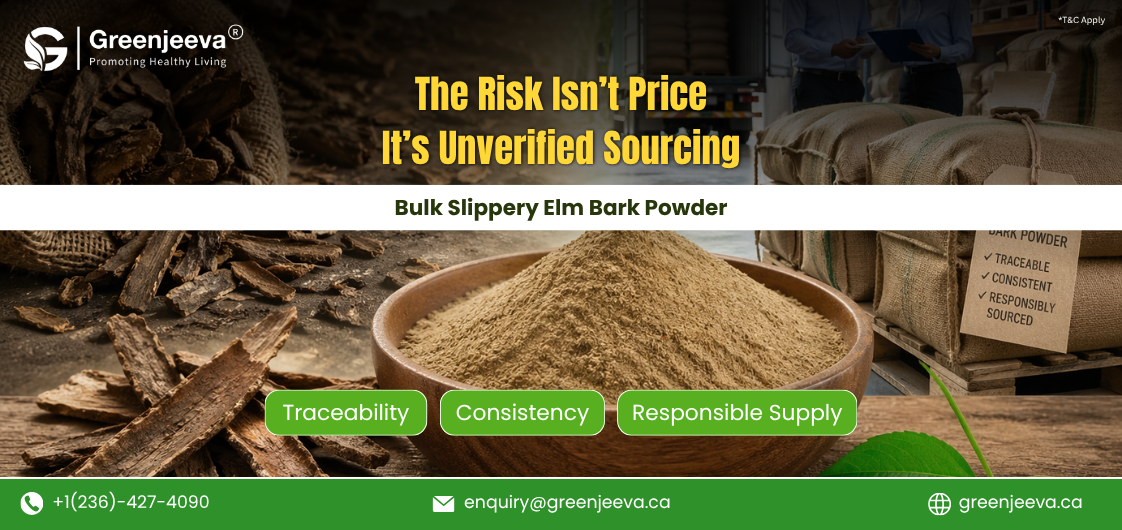
Bulk buyers are paying closer attention to how ingredients are sourced and bulk slippery elm bark powder is no exception. What looks like a simple botanical ingredient often comes with deeper sourcing challenges, especially when sustainability and long-term availability are considered.
Slippery elm is not a fast-growing, easily cultivated crop. Much of the supply still depends on wild harvesting, which makes sourcing practices critical. For procurement teams, this is not just about environmental responsibility—it directly affects batch consistency, supply reliability, and regulatory alignment.
This blog breaks down what sustainability actually means in this category and how to evaluate a sustainable slippery elm bark powder supplier beyond surface-level claims.
Why Sustainability Is a Critical Factor in Slippery Elm Bark Powder Sourcing
Sustainability in slippery elm sourcing is not just a branding claim; it is a supply chain reality.
The inner bark of the slippery elm tree is the usable part and harvesting it incorrectly can damage or kill the tree. In regions where demand has increased, unregulated harvesting has already led to pressure on natural populations. This creates two immediate risks for buyers: supply instability and inconsistent raw material quality.
Sourcing ethically sourced slippery elm bark helps mitigate these risks. Suppliers who follow controlled harvesting practices tend to offer better batch consistency and more predictable supply timelines. On the other hand, suppliers who rely on opportunistic or unverified sourcing often struggle with variability and long-term reliability.
For bulk buyers, sustainability is closely tied to operational continuity—not just environmental positioning.
Where Slippery Elm Bark Comes from and Why It Impacts Sustainability
Slippery elm trees are native to North America, with sourcing concentrated in specific regions. This is why many buyers specifically look for slippery elm bark powder bulk supplier in Canada.
However, origin alone does not guarantee sustainability.
A key distinction lies in how the bark is harvested. Wild harvesting remains the dominant method, but practices vary widely. Some suppliers work with trained harvesters who follow controlled stripping techniques that allow trees to recover. Others operate with minimal oversight, increasing the risk of overharvesting.
For teams involved in bulk slippery elm bark powder sourcing, understanding the origin is only the first step. The real value lies in traceability—knowing how the material moves from forest to processing facility, and whether responsible practices are followed throughout.
What Defines Ethically Sourced Slippery Elm Bark Powder?
The term “ethical sourcing” is often used loosely, but in the context of slippery elm, it has specific implications.
First, harvesting methods matter. Responsible suppliers avoid complete bark removal and instead follow partial harvesting techniques that support regeneration. This ensures that the tree can continue to grow and be harvested again over time.
Second, traceability plays a central role. An organic slippery elm bark powder supplier or sustainability-focused supplier should be able to provide clarity on sourcing regions, harvesting partners, and processing steps. Even when formal certifications are limited, documentation and transparency are strong indicators of reliability.
Third, processing integrity should not be overlooked. The transition from raw bark to powder must maintain consistency without introducing unnecessary variability. This includes proper drying, grinding, and handling practices.
In practical terms, ethically sourced slippery elm bark is less about marketing labels and more about verifiable sourcing discipline.

Key Factors Bulk Buyers Should Evaluate Before Choosing a Supplier
Choosing the right supplier goes beyond checking specifications. For slippery elm, it requires a deeper look at sourcing and operational practices.
1. Traceability and Source Transparency
A reliable supplier should be able to clearly map the origin of their material. This includes identifying sourcing regions and, ideally, the harvesting network. Lack of clarity at this stage often leads to inconsistencies later.
2. Harvesting Practices and Regeneration Approach
Ask how the bark is harvested. Suppliers focused on sustainability will have defined harvesting protocols and may work with trained partners. This directly impacts the long-term availability of raw material.
3. Certifications and Documentation
While certifications like "organic" can be useful, they should not be the only evaluation factor. A bulk organic slippery elm bark powder supplier should also provide COAs, sourcing declarations, and batch-level documentation that supports consistency and compliance.
4. Processing Standards and Powder Specifications
Clarity on powder format is essential. Buyers should confirm whether they are sourcing pure bark powder (not extract), along with details like mesh size, moisture content, and particle consistency. These factors influence how the ingredient performs in downstream applications.
5. Supply Consistency for Bulk Orders
Scaling supply in natural ingredients is not always straightforward. Suppliers involved in bulk slippery elm bark powder sourcing should demonstrate the ability to maintain consistent supply across multiple batches without compromising quality.
Challenges in Bulk Slippery Elm Bark Powder Sourcing
Sourcing slippery elm in bulk comes with a unique set of challenges.
The first is limited availability. Since the ingredient relies heavily on wild harvesting, supply cannot always be scaled quickly. Seasonal variations and regional constraints further affect availability.
The second challenge is variability. Differences in harvesting methods, drying conditions, and processing standards can lead to noticeable variation in color, texture, and moisture levels across batches.
The third challenge is supplier inconsistency. Not every slippery elm powder wholesale supplier operates with the same level of control or transparency. This makes supplier evaluation a critical step in procurement.
Understanding these challenges upfront helps buyers set realistic expectations and choose partners who can manage these variables effectively.

How to Identify a Reliable Slippery Elm Powder Wholesale Supplier
A reliable supplier is defined by how they manage complexity, not how they present their product.
Start by asking direct questions about sourcing. Where is the material coming from? How is it harvested? Can the supplier provide batch-level traceability?
Look for consistency in documentation. Reliable suppliers maintain structured records, including COAs and sourcing details, that align with each batch.
Watch for red flags. Vague answers, inconsistent specifications, or an inability to explain sourcing practices often indicate weak supply chain control.
For buyers working on bulk slippery elm bark powder sourcing, building a long-term relationship with a dependable supplier is more valuable than short-term cost advantages. Stability, transparency, and responsiveness tend to have a greater impact over time.
Conclusion
Sourcing bulk slippery elm bark powder is not just about meeting specifications—it is about understanding the supply chain behind the ingredient.
Sustainability, in this context, directly impacts supply stability, consistency, and long-term reliability. Buyers who take the time to evaluate sourcing practices, traceability, and supplier capabilities are better positioned to avoid disruptions and maintain quality standards.
Working with a bulk organic slippery elm bark powder supplier that prioritizes transparency and responsible sourcing can make a measurable difference—not just in procurement efficiency but in overall product integrity.
Explore More Organic Superfood Ingredients from Green Jeeva Canada
Along with organic slippery elm bark powder, Green Jeeva Canada offers a broad portfolio of premium organic superfood, botanical, and functional ingredients for food, beverage, nutraceutical, and wellness applications. Our ingredients are carefully sourced to support clean-label product development and innovative formulations.
Explore some of our related ingredients:
Organic Green Tea Leaves Powder
Organic Hibiscus Flower Powder
**The Food and Drug Administration has not evaluated these statements. This product is not intended to diagnose, treat, cure, or prevent any disease.**